


Have you ever managed a large t-shirt printing order with sizes ranging from youth small to 3XL? It’s a common challenge to get one design to look great on every single shirt size. If the graphic is too small on a large tee, it looks like a postage stamp. If it’s too big on a small one, it wraps around the sides. This guide will walk you through sizing, placement, and grouping your screens to achieve the best results and ensure every garment looks professional.
Getting the print size right is one of the most important steps in t-shirt printing. A design that looks perfect on a computer screen can appear too large or small once printed, impacting the final product’s professional look and how your brand is perceived.
Following best practices for proper sizing helps you avoid these issues. It ensures your artwork fits correctly on different shirt sizes, stays readable, and prevents costly reprints. Understanding how to handle various sizes is key to delivering a high-quality product every time.
Visual balance is everything when it comes to custom apparel. When a design’s size and design placement are mismatched for the garment, it immediately looks unprofessional. For example, a standard adult-sized graphic printed on a youth small shirt can wrap around the sides, making it unreadable and distorting the image.
Conversely, a small, youth-sized design on a 3XL shirt can appear lost and unintentional, floating in a vast sea of fabric. This “postage stamp” effect undermines the design’s impact. For the best look, the placement should be proportional to the shirt’s size, typically centered on the chest.
Achieving professional results means ensuring the graphics look like they were made for each specific shirt. This requires careful consideration of the available print area and how the design scales across different sizes. Proper scaling maintains visual harmony and makes the final product look retail-ready.
When customers order custom apparel, they expect the design to look good regardless of the shirt size. The fit of a garment can significantly affect how a design appears. A graphic that looks balanced on a medium unisex shirt might seem too large on a fitted women’s cut or too small on a 4XL.
It’s important to manage customer expectations by explaining how dimensions work across different garments. Men’s/unisex, women’s, and youth shirts have different printable areas due to their construction. Yes, there are often design size differences; for example:
Educating your client helps them understand the value of using different screen sizes for different apparel groups. This transparency builds trust and helps them make an informed decision between a budget-friendly universal print and a more professional tiered approach.
Knowing the standard print size for different placements gives you a reliable reference point when creating your artwork. These dimensions are widely accepted in the industry and work for most adult unisex t-shirts, helping you avoid designs that are too big or too small.
Using a standard size in inches as a starting point removes a lot of guesswork from the process. Whether you’re designing for the full front, left chest, or back, these guidelines help ensure your design size is appropriate for the placement and looks intentional and professional.
For adult unisex t-shirts, there are established conventions for print size that help ensure a balanced and professional look. The most common placement is the full front, which is centered on the chest and offers a large canvas for graphics and illustrations.
The standard print size for a full front design on adult shirts is typically around 11 to 12 inches in width. For a maximum-sized print, you could go up to 12 inches wide by 12 inches tall. This size is ideal for band merchandise, statement designs, and large, detailed graphics that need to make an impact.
Other placements have their own standard dimensions. A left chest print is much smaller, while a full back print can be as large as a full front one. Here is a quick reference for common adult unisex dimensions:
| Placement | Common Dimensions (inches) | Best For |
|---|---|---|
| Full Front | 11”–12” wide x 12” tall | Large graphics, illustrations, merch |
| Left Chest | 3”–4” wide x 3”–4” tall | Logos, minimalist branding |
| Back | 11”–12” wide x 12” tall | Event details, team names, slogans |
| Sleeve | up to 4” wide x 4” tall | Small logos, icons, short text |
Print size recommendations change significantly for youth and women’s t-shirts due to their smaller and often more fitted construction. Using an adult-sized print on these garments will lead to a poor result, as the design will likely wrap around the sides or sit uncomfortably. These smaller sizes require scaled-down artwork.
For youth tees, a design that is approximately 8.5 to 9 inches wide is a great starting point. This size ensures the graphic fits neatly on the chest without overwhelming the small shirt type. Similarly, women’s fitted tees benefit from this same smaller print size, as it aligns better with their contoured shape compared to a boxy unisex shirt.
Ultimately, the goal is to make the design look proportional on every garment. Adjusting the print size for youth and women’s shirts is a critical step in achieving a professional, retail-quality look across a diverse order that includes multiple shirt types.
For large orders with a wide range of sizes, the tiered two-screen system is the most efficient and professional method. This approach involves splitting the order into two groups and using a different print size for each, ensuring the graphic looks great across all garments.
This tiered sizing strategy is considered one of the best practices in the printing industry. While it requires creating separate screens for each size tier, the result is a much more retail-ready product that avoids the awkward look of a one-size-fits-all print.
Implementing tiered artwork sizing is a practical way to handle proportional scaling for multi-size orders. In a typical screen printing job, you split the order into two main categories. The first tier includes youth and women’s shirts, while the second tier covers adult unisex sizes.
For the first tier (youth/women’s), you would use a smaller design size, generally between 8.5 and 9 inches wide. For the second tier (adult unisex), you would use a larger version of the art, typically 11 to 12 inches wide. This ensures the graphic doesn’t overwhelm the smaller garments or get lost on the larger ones.
If the order includes oversized shirts like 2XL and up, you could even add a third tier with a 14-inch wide print for a truly premium, retail look. This method of scaling artwork correctly ensures every shirt looks intentionally designed and professionally executed.
While creating a separate print size for every single shirt would offer perfect proportions, it’s not cost-effective. The tiered two-screen system strikes an ideal balance between cost efficiency and professional results. It keeps production manageable while delivering high-quality custom apparel.
Keep in mind that adding a second art size means doubling your screen and setup costs. If you’re printing a five-color design, a second tier requires burning five more screens and setting up five more stations on your press. This extra labor and material cost must be factored into your quote. Some best practices for managing this balance include:
Most clients are willing to pay more for a better product once they understand the value. Explaining the “retail-ready” look of a tiered system helps justify the added cost and ensures they are happy with the final printing outcome.
Sizing is only half the battle; print placement must also be adjusted for each garment type. A design that is perfectly placed on an adult large will look awkward on a youth small if you use the same measurements. The vertical drop from the collar is crucial for visual balance.
Following placement rules for different shirt size ranges ensures consistency and a professional appearance. The most popular placements, like the full front, have specific guidelines that adapt to the garment’s dimensions, ensuring the design sits correctly on the chest area.
To get the best look, you need to adjust the placement of your design based on the garment size. For adults, a full front design should typically sit about 2 to 2.5 inches down from the collar hem. This positions the graphic squarely on the chest for optimal visibility.
For women’s and youth shirts, the placement needs to be higher. A vertical drop of about 1.5 to 2 inches from the collar is ideal. This adjustment accounts for the smaller frame and ensures the design doesn’t end up looking like it’s on the stomach rather than the chest.
These guidelines are essential for maintaining proportional balance across an entire order. Whether you’re printing on adult, women’s, or youth garments, modifying the placement is just as important as scaling the artwork itself. It’s a key detail that separates amateur prints from professional ones.
Achieving proportional balance involves carefully adjusting the vertical drop of your design placement. For Youth and Women’s shirts, positioning the artwork 1.5–2 inches below the collar hem ensures visibility and aesthetics, while Adult Unisex styles require a drop of 2–2.5 inches for cohesion across different sizes. This thoughtful alignment helps avoid mismatches in visual impact, especially when scaling designs for varying shirt types. Adapting print size and placement rules aids in achieving the best results for diverse garment sizes and enhances overall clarity.
Beyond artwork, your equipment plays a vital role in successfully printing on different sizes. Using the right tools is essential for precision and quality, especially when dealing with smaller garments. The wrong platen can ruin an entire batch of shirts.
Printers need to ensure their setup can handle the demands of a varied shirt size run. From platens to squeegees, having the correct equipment allows you to adapt your workflow, maintain a consistent ink deposit, and avoid common issues that arise from a one-size-fits-all approach to the print area.
One of the biggest mistakes you can make is trying to load a small garment onto a standard adult platen. Youth-sized platens are specifically designed to accommodate a smaller garment size, allowing the shirt to sit naturally without being stretched. This is crucial for printing accuracy.
When you force a youth or fitted women’s tee onto a large board, the fabric is pulled too tight. This distortion not only warps the garment but can also ruin the print. To pick the right design size and ensure it prints correctly, matching the platen to the garment is non-negotiable. Key benefits of using youth-sized platens include:
Always use the right equipment for the job. Swapping to a youth platen for smaller sizes is a simple step that makes a huge difference in the final quality of your printing.
Preventing fabric distortion is a top priority in screen printing, especially when working with varied sizes. When a garment is over-stretched on a platen that is too large, it opens up the knit of the fabric. This can lead to fibrillation, where tiny fibers poke through the ink film after washing, making the print look faded and fuzzy.
This issue is directly tied to how you scale your artwork and prepare your station. To correctly apply a design, the garment must lie flat and tension-free. Over-stretching not only distorts the shirt’s shape but also affects the ink deposit. The ink may not lay down evenly, causing inconsistencies and potentially ruining any fine details in your design.
By using the correct platen size for each garment, you create a stable foundation for the ink. This ensures a smooth, even print that holds up over time. Taking this step protects the integrity of both the design and the garment itself, resulting in a product your customers will love.
When handling multi-size orders, simply using one design file for all shirts is a recipe for poor results. Proper artwork scaling is necessary to ensure the design looks balanced on every garment, from a youth small to an adult 3XL. This requires adjusting the artwork for different size tiers.
A great way to communicate these adjustments to your client is through mockups. Visual mockups show how the scaled design will look on various shirt sizes, helping them understand the value of a tiered approach and approve the final look before production begins.
To scale designs correctly across all shirt sizes, you should plan on creating at least two different versions of your artwork. The first step is to establish your size tiers. A common method is to group youth and women’s sizes together, and adult unisex sizes into another group.
Once your tiers are defined, you can adjust the design size for each. For example, your adult design might be 11 inches wide, while your youth version is 9 inches wide. Using software like Adobe Illustrator is ideal for this, as vector files can be scaled without losing clarity. This ensures your logos and text remain sharp at any size.
For orders with oversized shirts (2XL and up), you might consider a third, even larger design size to maintain proportion. The key is to make the scaling intentional, ensuring the design fits the available space on each shirt size, rather than looking like an afterthought.
Visual mockups are an invaluable tool to remove guesswork and align with your client. By creating a proof that shows how a design will look on different shirt sizes—like a Youth Small, an Adult Medium, and a 3XL—you can clearly demonstrate the impact of sizing and placement. This answers the client’s question, “Where should I place my t-shirt design for the best look?” before a single shirt is printed.
Presenting mockups helps the client understand the difference between a single-size print and a tiered-size approach. They can see the “postage stamp” effect on a large shirt or the “wrap-around” issue on a small one, making it easier to justify the cost of a multi-screen setup. This process builds trust and ensures everyone is on the same page. Mockups are beneficial because they:
Ultimately, showing is more effective than telling. A good mockup makes the decision for the client and reinforces your shop’s professionalism.
In conclusion, mastering sizing strategies in t-shirt printing is crucial for achieving both visual appeal and customer satisfaction. By understanding the unique requirements of various garment sizes and implementing techniques like the tiered two-screen system, you can effectively balance cost efficiency with professional quality. Proper print placement and equipment considerations ensure that each size looks its best while maintaining consistency across your product range. Remember, clear communication with clients through visual mockups can significantly enhance their decision-making process, leading to stronger relationships and repeat business. If you have any questions or need assistance with your printing needs, get in touch with us today!
The standard print size for a center chest design on an adult unisex shirt is typically 11–12 inches wide. For youth and women’s shirt sizes, the standard dimensions are smaller, usually around 8.5–9 inches wide, to better fit the reduced print area and maintain visual balance.
To scale artwork for oversized t-shirts, consider creating a separate, larger version of the design, around 14 inches wide. This practice of proportional scaling ensures the graphic doesn’t look too small on the larger garment size and maintains a balanced, retail-ready appearance instead of a “postage stamp” effect.
A left chest print should be placed over the heart area. On an adult garment, this is typically 3 to 4 inches down from the collar and centered between the middle of the shirt and the sleeve. Adjust the placement slightly higher for a smaller shirt size to ensure it sits correctly.
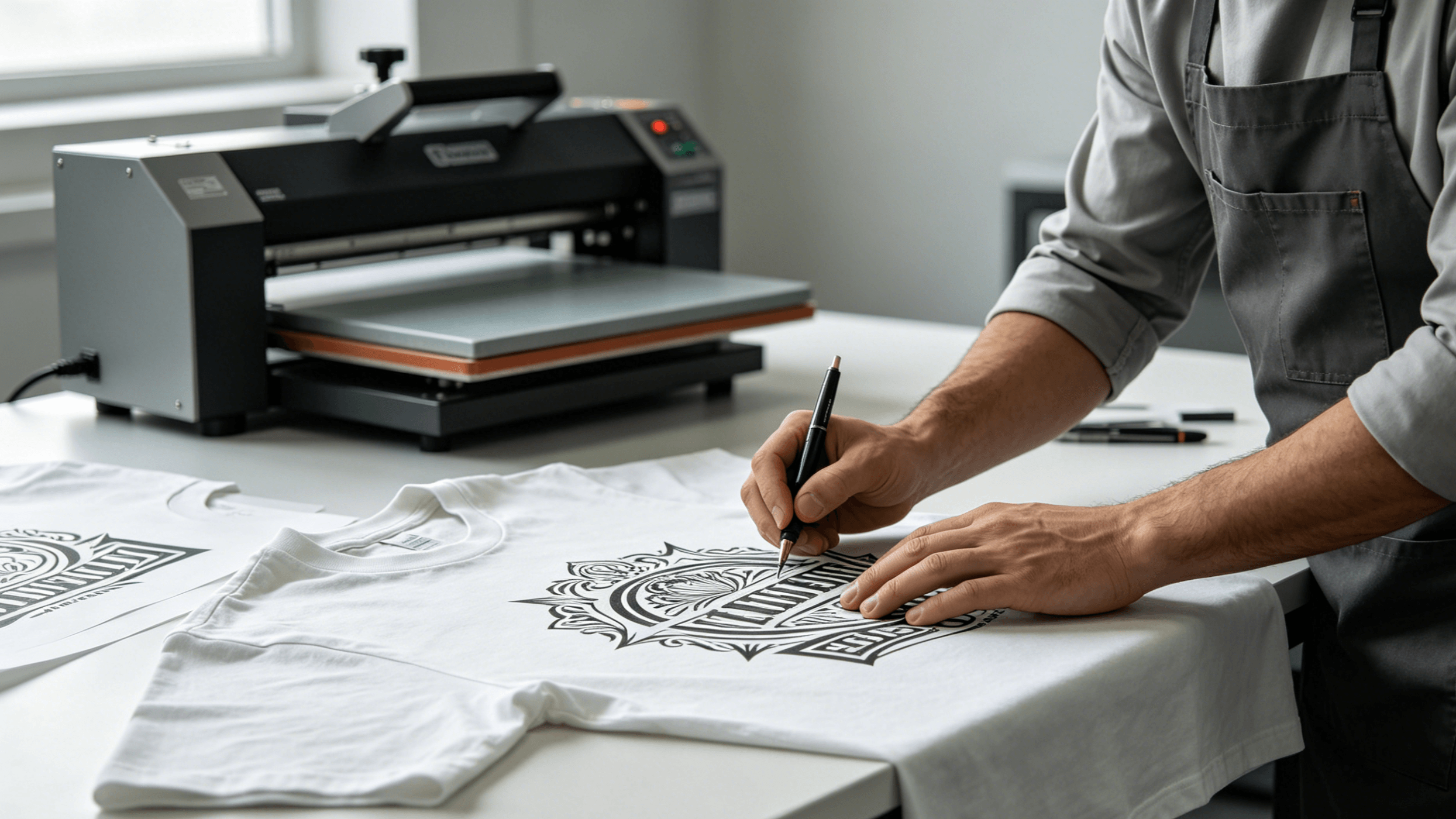
Introduction Custom apparel is hitting massive numbers, with the market expected to pass $45 billion by 2030. If you’re looking at the scene in 2026, Heat Press Vinyl (HTV) is...
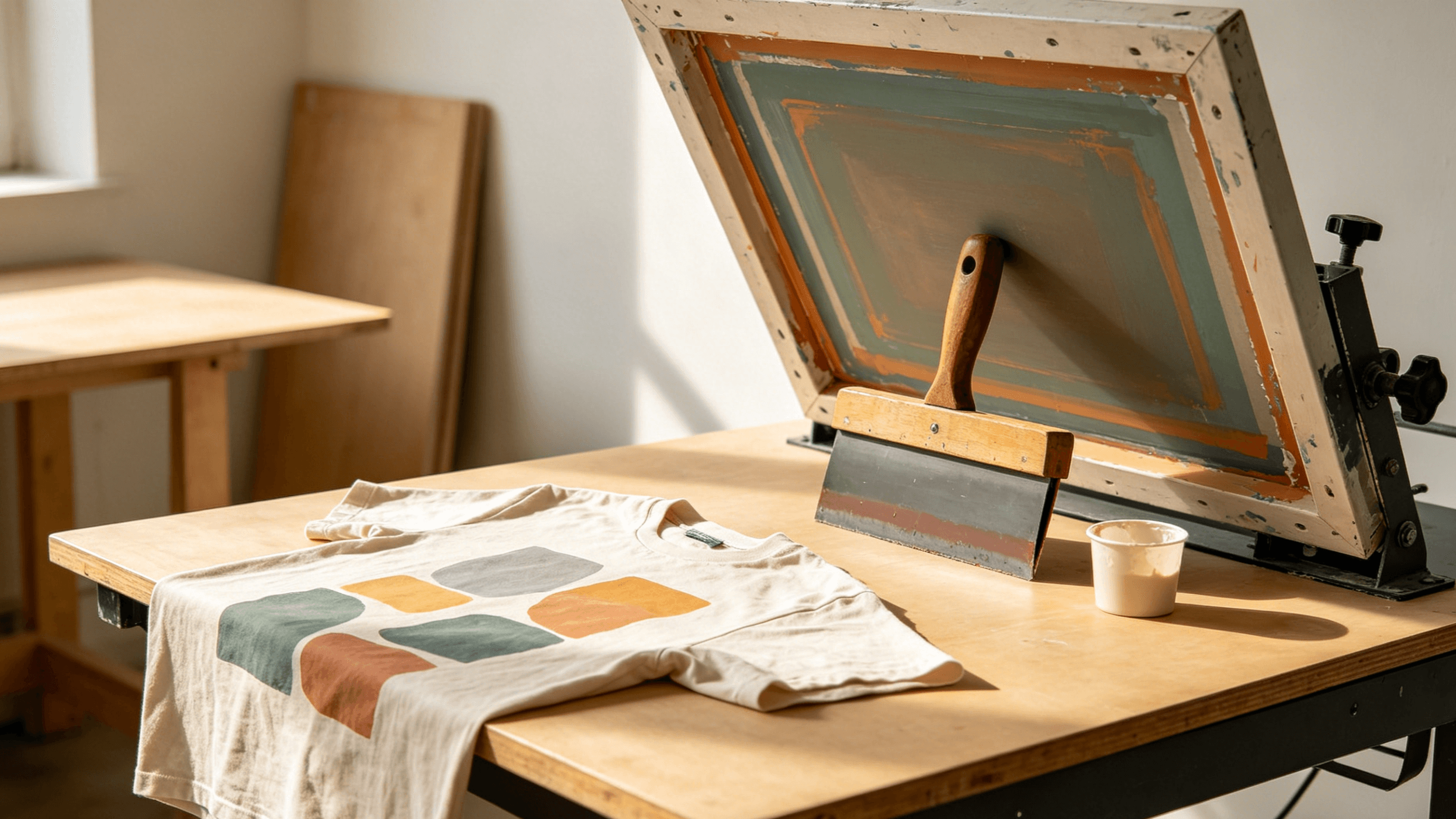
Introduction The apparel industry has exploded lately. We’re looking at a market projected to hit $17.5 billion by 2027, mostly because everyone wants custom gear, unique merch, and fast-fashion pieces...
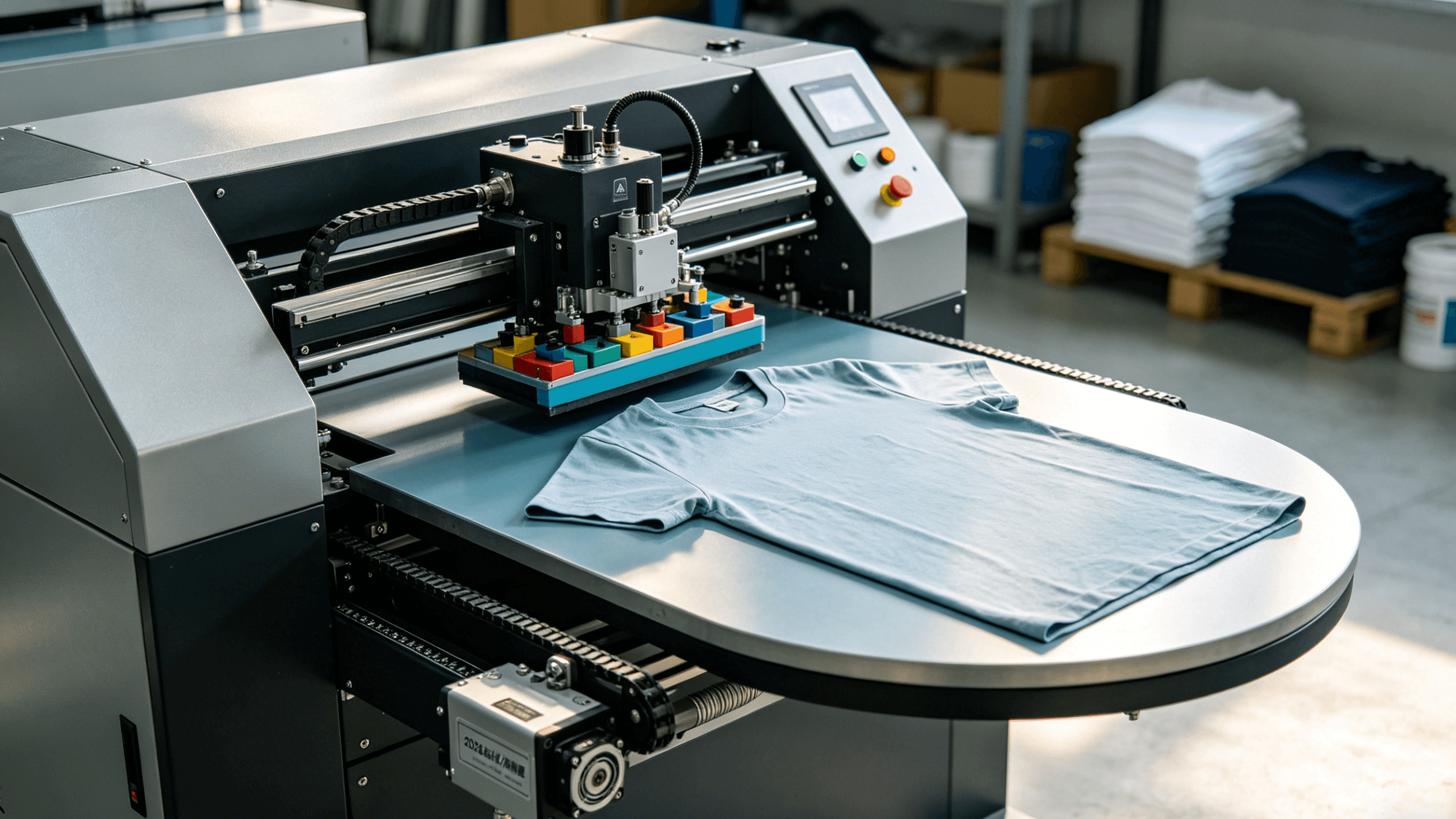
Introduction The custom t-shirt business is on a serious roll. Experts think the global market will hit around USD 5.1 billion by 2026. Even with all the new tech out...