

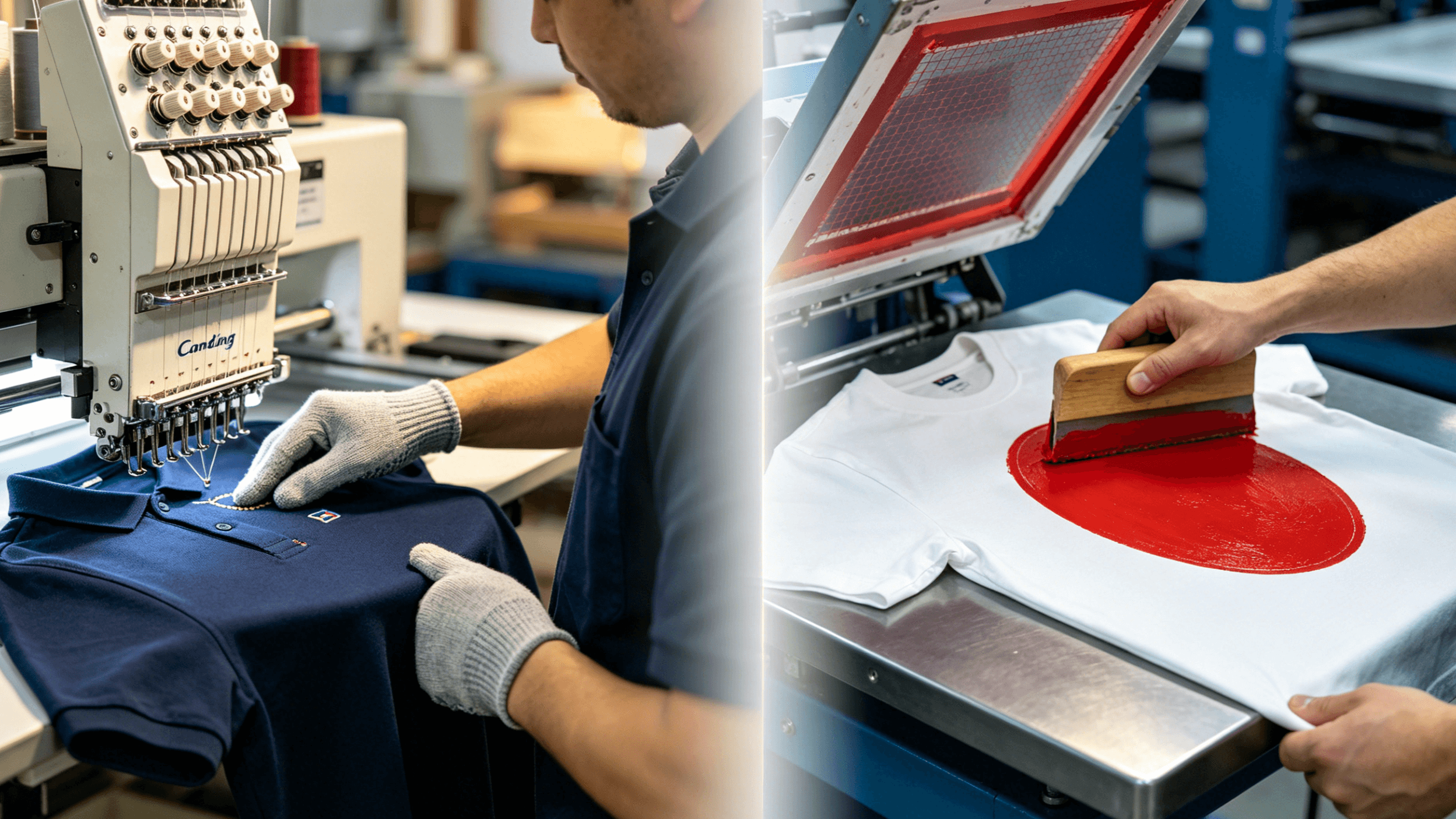
In the apparel world, choosing between embroidery and screen printing isn’t just about looks—it’s a business decision that hits your margins and defines how people see your brand. Embroidery gives you that high-end 3D texture, but screen printing is still the king of bright, massive graphics. We’re seeing the personalized clothing market blow up right now, and at Cnding Group, we’re right in the middle of it. We use things like CTS technology and Hybrid printing to help shops figure out how to mix old-school durability with modern speed.
Before you start a production run, you have to look at how these methods actually work. It changes your overhead and your final quality.
Embroidery is basically drawing with a needle and thread at high speeds. But you can’t just hit “print.” You have to go through “Digitizing.” This is where you turn a logo into a DST or PES file that tells the machine exactly where to move. The biggest cost here is the Stitch Count. If a logo needs 10,000 stitches instead of 5,000, the machine runs longer and uses more thread. Big, chunky designs get expensive fast.
This is all about pushing ink through a mesh screen. Usually, every color needs its own screen, which used to be a total nightmare involving film and chemicals.
We’ve changed that at Cnding with Computer-to-Screen (CTS) Laser Imaging. Traditional prep takes forever, but our CTS systems can cut that setup time by about 60-70%. We use lasers to burn the design onto the mesh, which keeps the tiny details sharp even when you’re running an H9PRO series machine at full tilt. You can go from a digital file to a physical screen in minutes, which is a lifesaver for fast-fashion brands.
By digitizing the screen-making workflow, manufacturers can transition from design to production in minutes rather than hours, providing a massive ROI advantage in the fast-fashion and B2B uniform sectors.
Embroidery is the tank of the garment world. Those polyester threads can handle industrial washing and chemicals without fading. That’s why you see it on work uniforms and gym gear. Screen printing used to have a bad reputation for cracking, but that’s mostly a thing of the past. If you use a Cnding H9PRO Series Oval Printing Machine with high-solid acrylic inks, the print stays flexible. It moves with the fabric instead of fighting against it.
Embroidery has a literal 3D weight to it. It feels premium, but if you put a giant embroidered patch on a thin t-shirt, it’s going to be heavy and scratchy. Screen printing is much softer. If you want a photo-quality image that doesn’t feel like a piece of plastic, our Hybrid (Oval + Digital) Systems are the way to go. You get the detail without the bulk.
Embroidery is limited by how many needles the machine has (usually 12 to 15). It’s terrible at gradients. Screen printing, though, is 3 to 4 times faster when you’re doing big blocks of color. For high-volume work, screen printing wins every time.
Embroidery needs “meat” to grab onto—think hats, hoodies, or canvas bags. If the fabric is too thin, the stitches will pull and pucker the shirt. Screen printing works on almost anything. We even make Specialized Footwear Oval Printing Machines that print on mesh and leather for sneakers.
Embroidery is great for small runs because the setup is all digital. But for a big order, the price stays high because the machine still has to do every single stitch. Screen printing has a higher upfront cost for the screens, but once you start moving, it’s incredibly cheap. Our data shows that moving to an automated oval machine can boost your output by 300% or more.
When deciding between embroidery and screen printing, the best choice depends on your garment type, order volume, desired look, and end use.
Go with Embroidery if:
Go with Screen Printing if:
| Feature | Embroidery | Screen Printing |
|---|---|---|
| Material | Heavy (Twill, Canvas) | Light/Technical (Jersey, Mesh) |
| Design Size | Small (Cuffs, Chest) | Large (Full back) |
| Quantity | Small batches | Bulk (50+) |
By aligning your decoration method with the technical strengths of your machinery—whether it’s the precision of stitching or the automated speed of Cnding’s H28 series—you can maximize both aesthetic quality and production ROI.
As the industry moves toward 2026, the rigid boundary between embroidery and screen printing is being dissolved by a third, more versatile contender: Hybrid Printing Technology.
While traditional screen printing excels at volume and embroidery offers texture, both have inherent limitations in the modern “on-demand” economy. Cnding’s Hybrid Oval + Digital Printing Machine (such as the H38 Series) bridges this gap by integrating high-speed screen printing stations with industrial-grade digital inkjet heads (utilizing high-precision Ricoh Gen5 technology).
For B2B brands, the Hybrid approach offers a unique ROI narrative:
Whether you are competing with the intricate textures of embroidery or the speed of screen printing, Hybrid Technology is the strategic “pivot” that allows modern factories to say “yes” to any design complexity without sacrificing their bottom line.
In summary, when comparing embroidery and screen printing, each method has clear strengths: embroidery wins with its premium 3D texture, exceptional durability, and sophisticated tactile feel, while screen printing excels in vibrant color reproduction, production speed, and cost efficiency at scale. The ideal choice ultimately depends on your specific needs — design complexity, order volume, fabric type, and desired brand perception.
For manufacturers seeking the best of both worlds, Cnding Group’s advanced Hybrid Oval + Digital Printing Machines (such as the H28 series) offer a powerful solution that combines the durability and opacity of screen printing with the unlimited colors and gradients of digital printing. If you are looking for a reliable way to balance cost, quality, and efficiency, explore Cnding Group’s full range of automated screen printing and hybrid solutions. Let our innovative equipment help your factory step into the era of intelligent manufacturing.
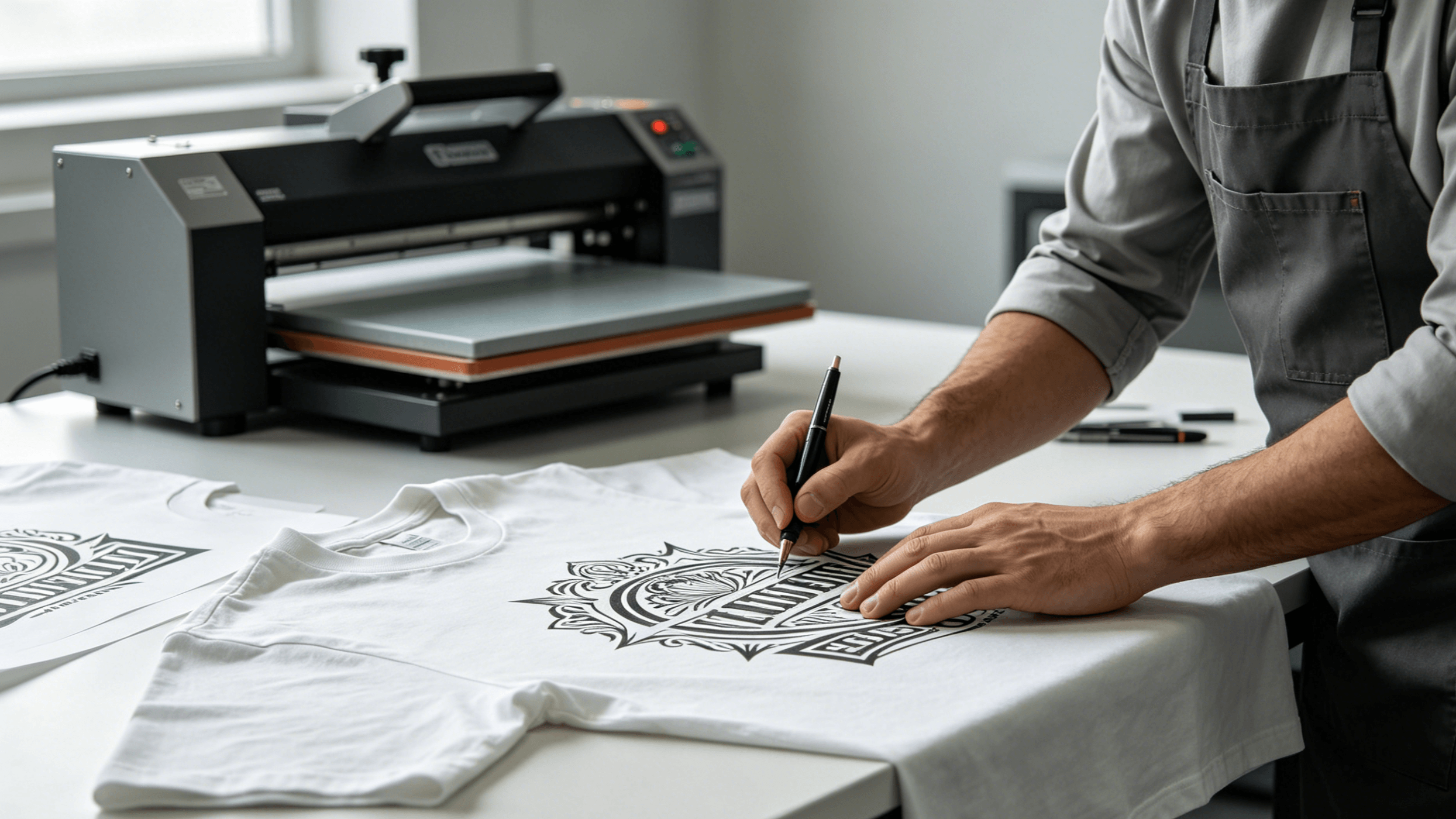
Introduction Custom apparel is hitting massive numbers, with the market expected to pass $45 billion by 2030. If you’re looking at the scene in 2026, Heat Press Vinyl (HTV) is...
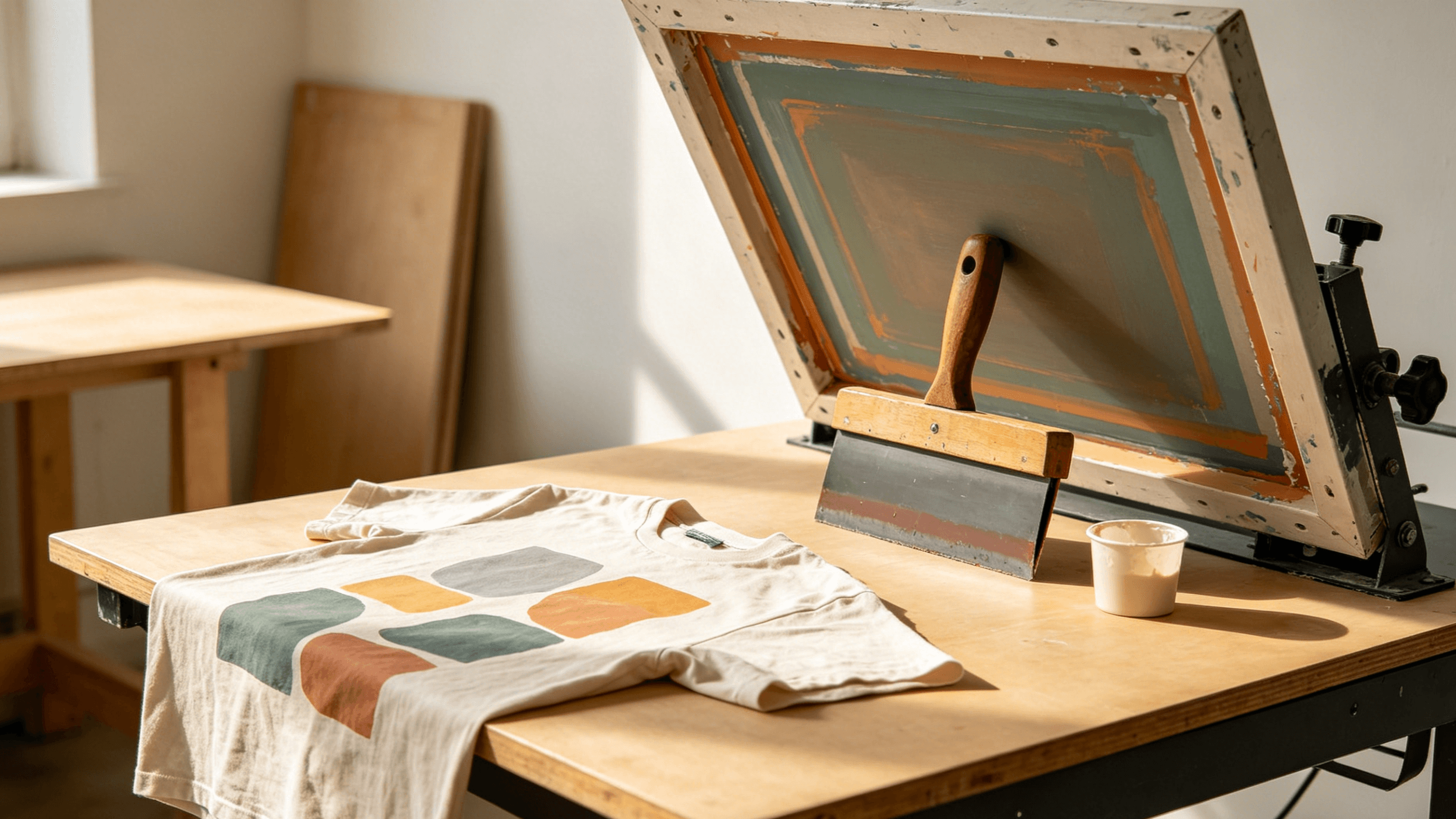
Introduction The apparel industry has exploded lately. We’re looking at a market projected to hit $17.5 billion by 2027, mostly because everyone wants custom gear, unique merch, and fast-fashion pieces...
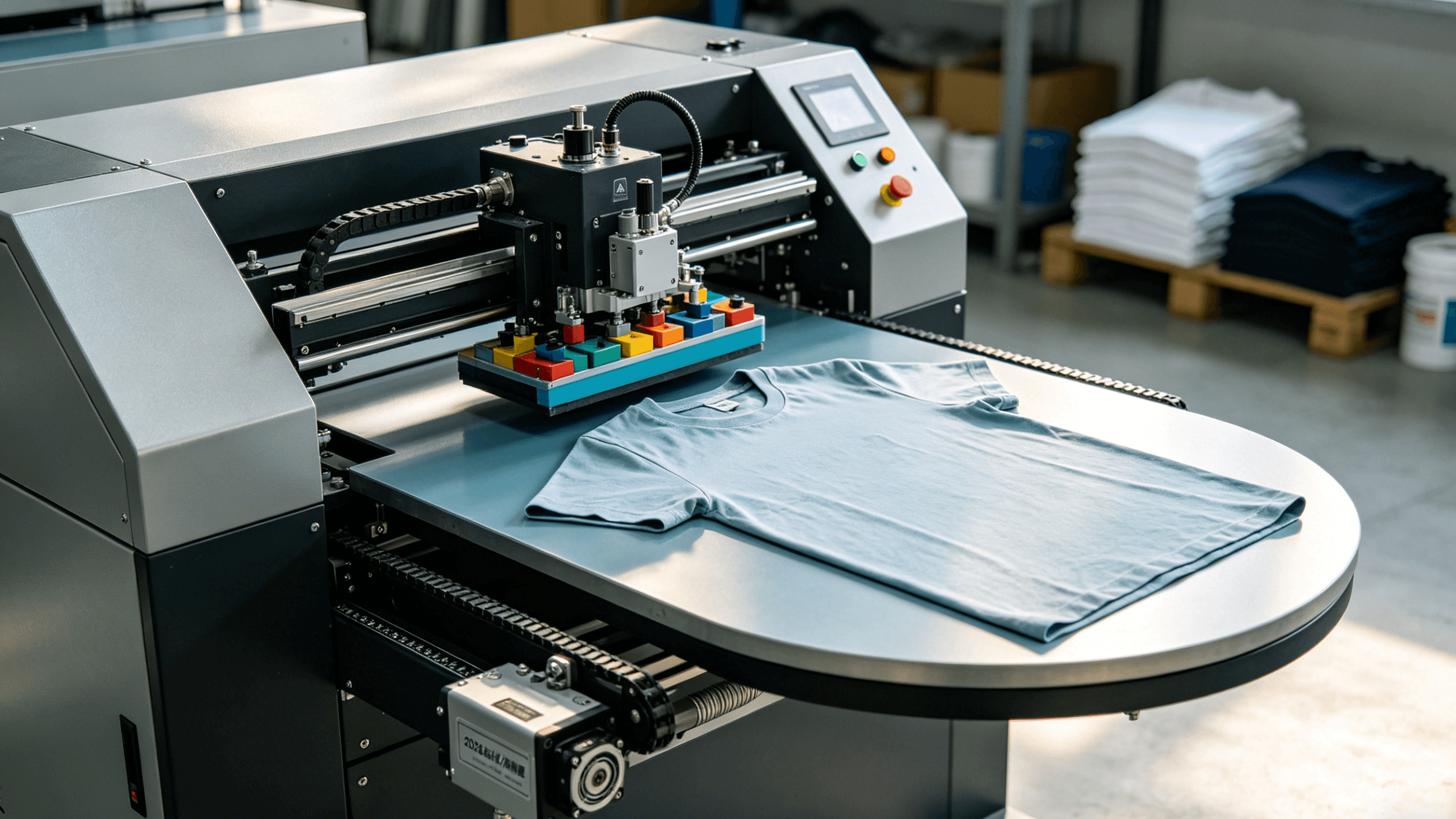
Introduction The custom t-shirt business is on a serious roll. Experts think the global market will hit around USD 5.1 billion by 2026. Even with all the new tech out...